Forspec

6 products
Cement-based waterproofing systems for damp substrates, planters, water features, tanks, lift pits and below-ground work — including negative-side products that hold back water pressing against the coating.
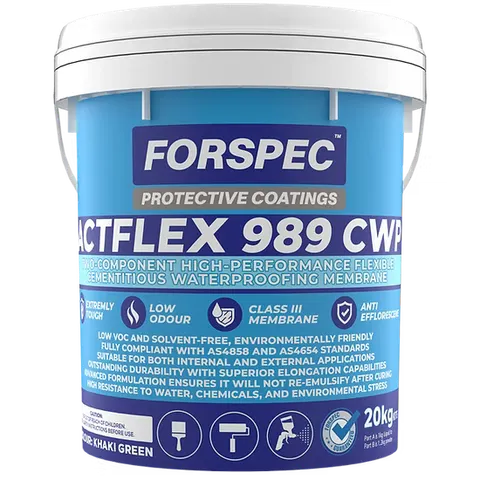
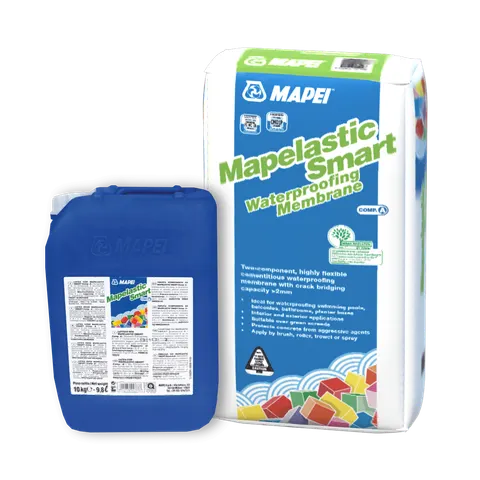
Positive-side waterproofing sits on the face the water reaches first and is always preferable. Negative-side products are applied on the dry face and resist hydrostatic pressure pushing through the structure — used where the positive face is inaccessible, such as an existing basement wall against earth. Negative-side systems must be rated for the head of water present; using a general cementitious coating in that position will simply blow off the wall.
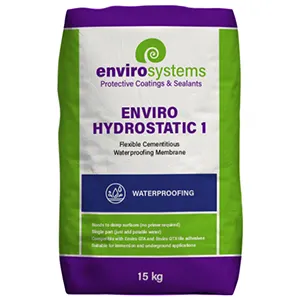
Unlike most membranes, cementitious systems want a saturated surface-dry substrate. Pre-wet the surface, remove standing water, then brush or trowel the slurry into the pores. Two coats at right angles is standard. Cure the applied membrane like concrete — protect it from drying out too fast for the first 24 to 48 hours, especially in wind or direct sun.
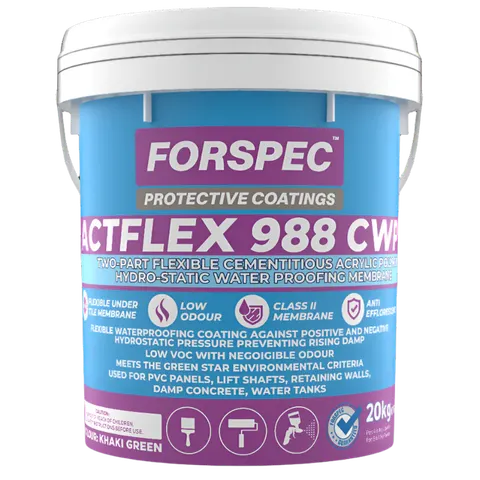
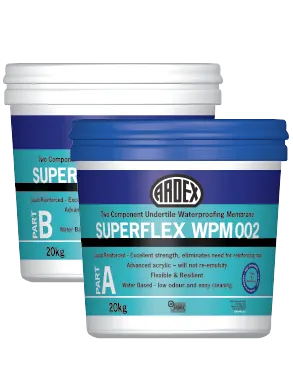
One-part cementitious membranes are gauged with water and are the simpler option for straightforward tanking on rigid substrates. Two-part systems replace the water with a liquid polymer, producing a flexible, crack-bridging membrane capable of accommodating hairline movement. Where the structure is expected to move at all — planters on a suspended slab, tanks, anything with a construction joint — specify the two-part flexible grade. The cost difference is small against accessing a failed planter membrane later.
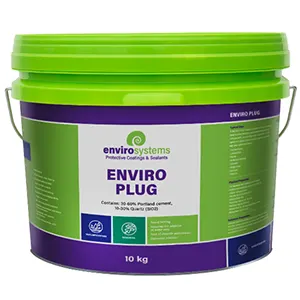
Below-ground work is governed by the head of water, not just the presence of moisture. Products are rated for a maximum positive or negative head, and exceeding it will push the membrane off the substrate regardless of how well it was applied. Fillet all internal corners with a cementitious mortar rather than leaving a sharp junction, and treat construction joints and any active leaks with a plugging compound before the membrane goes on. Water entering under pressure has to be stopped first — a membrane cannot be applied over running water.
Planter boxes are among the most common leak sources on residential and commercial jobs, because they combine constant moisture, root pressure, fertiliser salts and no easy access. Tank the full internal face and carry the membrane over the top of the wall, install drainage cell and a root barrier over the membrane, and keep the drainage outlet accessible. Cementitious systems suit this application because they tolerate permanent damp and bond well to the render or tile finish that usually goes over them.
Yes, and they bond well to cement-based tile adhesives, which makes them a good choice under tiled planters and water features.
Standard grades are rigid. Where movement or crack-bridging is required, use a two-part polymer-modified flexible grade.
Yes, and it is a good choice on masonry or render substrates. Confirm the product is rated for AS 3740 internal wet areas and follow the system's junction detailing.
Typically seven days for full cure, longer in cool conditions. Potable water applications also require the membrane to be certified for drinking water contact and usually need flushing before use.