Roberts Designs

6 products
Hook-and-loop sanding discs, backing pads and abrasive pads in the common sizes and grit ranges for orbital and random orbit sanders.
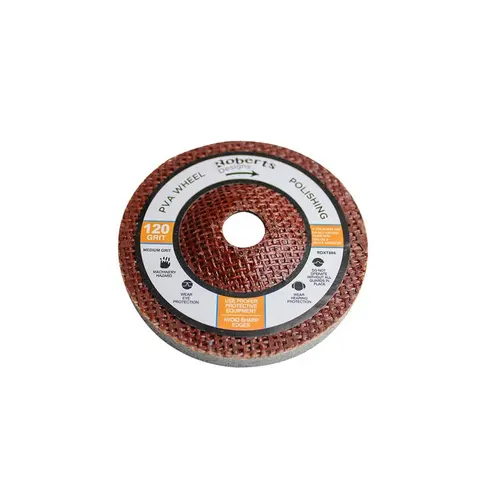
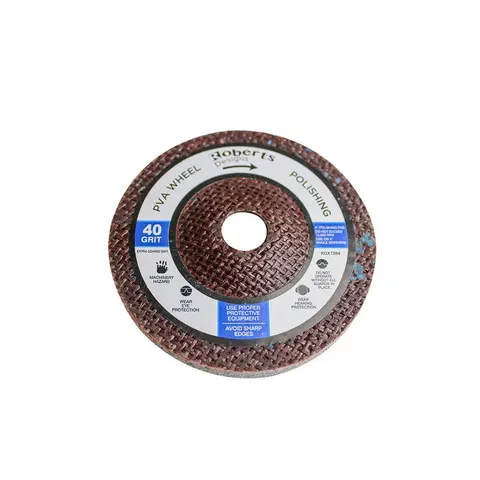
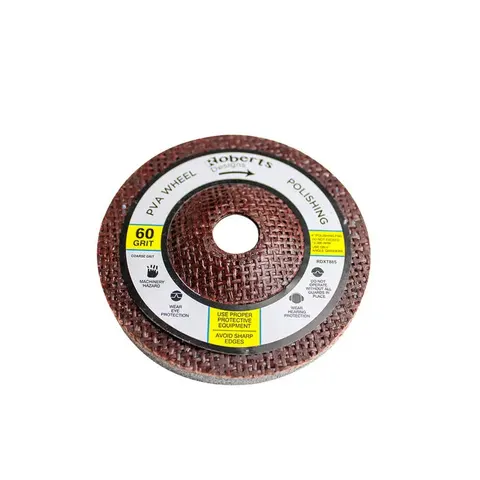
Skipping grits leaves scratches the next grit cannot remove, which show up under paint or sealer. Move through the sequence and change discs when they stop cutting — a loaded disc burnishes rather than sands and generates heat that can soften filler and coatings.
The hook-and-loop face on a backing pad wears out well before the sander does. A worn pad lets discs slip and spin off mid-cut, and a pad with hardened resin or filler stuck to it will not hold a disc flat, producing uneven scratch patterns. Backing pads are consumables — replace them rather than persevering with tape.
Discs with the correct hole pattern for your sander, connected to an extractor, cut noticeably faster and last longer because dust is cleared from the abrasive rather than being ground back into the surface. On plaster and filler the difference is dramatic. It also keeps the airborne dust down, which matters in occupied buildings.
Aluminium oxide is the general-purpose choice for timber and filler. Silicon carbide cuts harder materials and is used wet or dry on coatings and masonry. Ceramic abrasives cost more but last considerably longer on heavy stock removal. Using a cheap general-purpose disc on hard material simply means changing discs constantly.
Usually 80 to 120 grit depending on the texture required. Test on a sample area with the intended paint system first.
Usually sanding a coating before it has fully cured, or no dust extraction. Both load the abrasive with soft material.
When discs no longer grip firmly or the pad edge has broken down. It is a cheap part that affects finish quality significantly.