Envirosystems

1 product
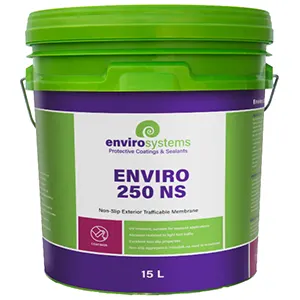
Protective topcoats for waterproofing membranes that stay exposed. UV-stable, trafficable and available in the standard grey and terracotta finishes plus clear grades for sealing over textured surfaces.
Most waterproofing membranes are not UV stable. Left exposed, the surface chalks, embrittles and eventually cracks — often within a couple of summers on a north or west-facing deck. A topcoat carries the UV load, adds abrasion resistance for foot traffic, and gives a finish that can be cleaned. It also lets you add slip resistance where the deck is trafficked wet.
Topcoats are a maintenance item, not a permanent layer. Most systems expect recoating every five to ten years depending on exposure. Building that into a maintenance schedule is far cheaper than replacing a failed membrane and the tiling above it. Hand the owner a written maintenance note at completion stating the expected recoat interval — it protects you as much as it helps them, because a topcoat that was never maintained is not a workmanship failure.
Exposed membrane and topcoat surfaces become slippery when wet, which matters on balconies, around pools and on external stairs. Broadcast an anti-slip aggregate into the wet topcoat and back-roll a further coat over it, or use a pre-filled non-slip grade. Aim the level of texture at the exposure — a heavily textured surface is safer underfoot but noticeably harder to sweep and clean, so pool surrounds and stairs get more texture than a covered balcony.
Dark topcoats on a west-facing deck reach surface temperatures well above ambient, which increases thermal movement in the membrane below and shortens its life. Lighter colours run considerably cooler and are the better technical choice on exposed horizontal surfaces, even where a darker finish is preferred visually. If a dark colour is specified, confirm the membrane beneath it is rated for the resulting service temperature.
Trafficable grades are rated for pedestrian traffic. For anything heavier, or for wheeled loads, check the specific product rating.
Typically every five to ten years depending on exposure, traffic and colour. Inspect annually for chalking, wear at traffic paths and any cracking.
Yes — clean thoroughly, remove any chalked material, and abrade if the existing coat is fully cured and glossy. Many systems also require a tie-coat when recoating after several years.