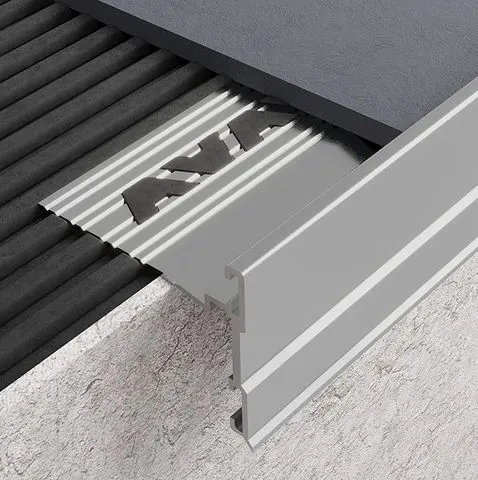
Amark Group

23 products
Edge trims, transition profiles and step nosings in aluminium, stainless steel and PVC, sized to the standard tile thicknesses.
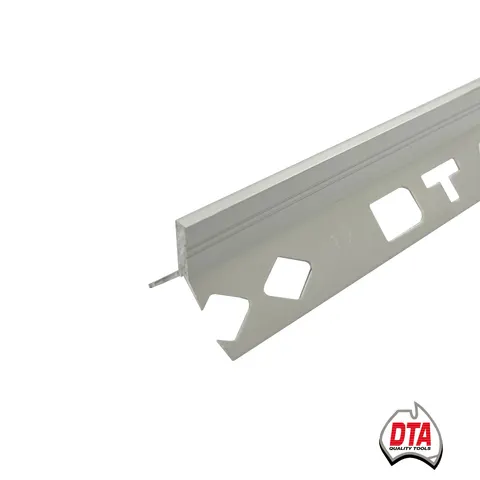
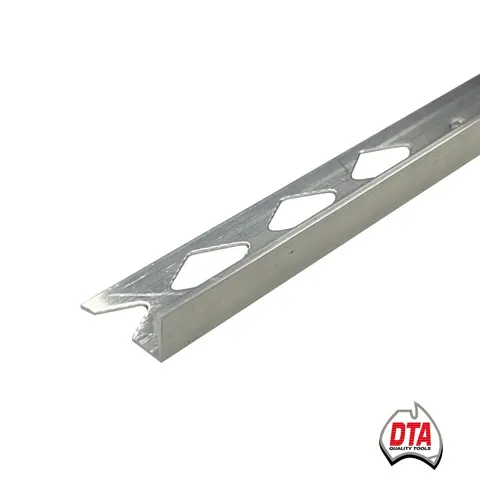
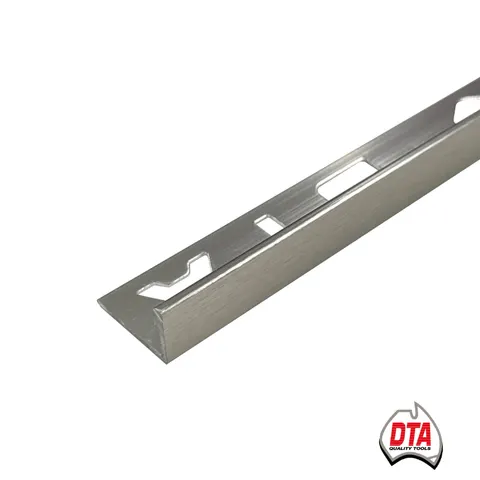
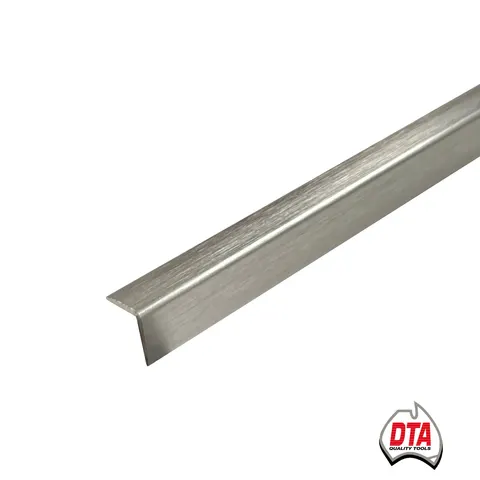
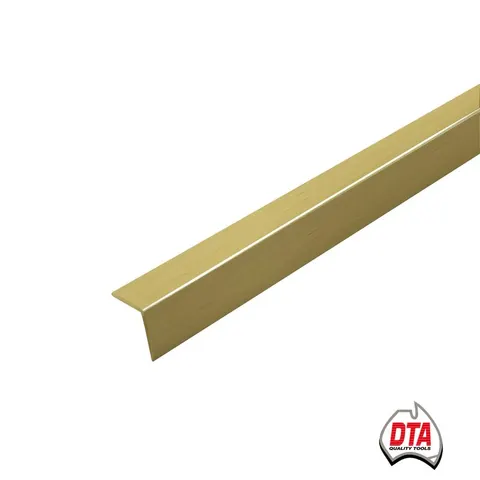
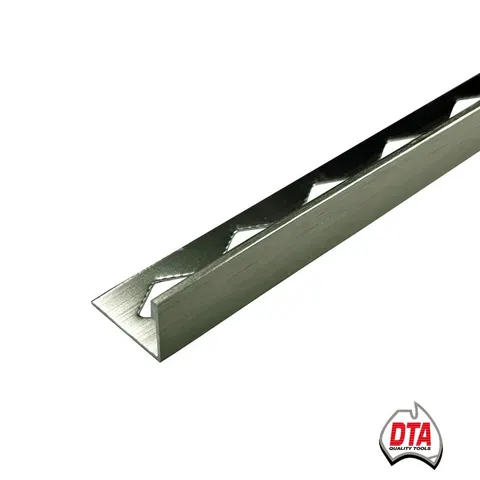
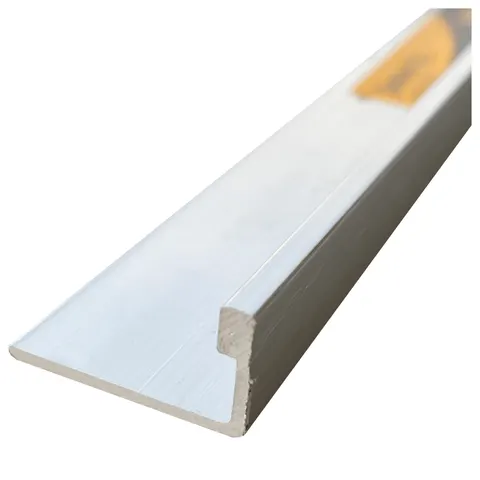
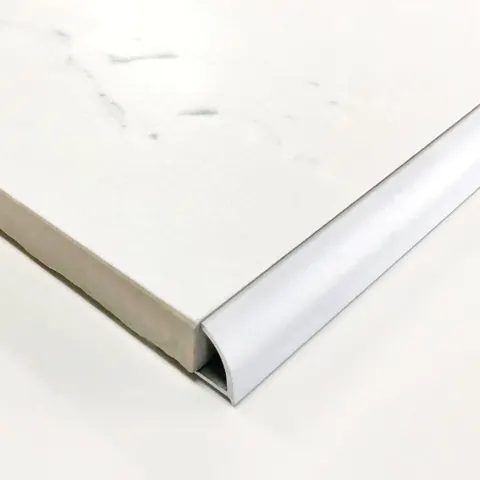
Trim height should match tile thickness plus the adhesive bed — typically tile thickness plus 2 to 3mm. A trim that sits proud creates a lip that catches; one that sits low leaves the tile edge exposed to chipping. Measure the actual tile, not the nominal size, since porcelain thickness varies between ranges.
Bed the perforated flange into the adhesive as you tile, not afterwards. The flange needs full adhesive contact to hold the trim rigid. Cut and mitre external corners rather than butting them, and seal the junction where the trim meets a wet area with a flexible sealant.
Where tile meets carpet, timber or vinyl, the transition profile has to manage a height difference and protect the tile edge in a high-wear location. Choose a profile rated for the traffic, and set it so the exposed edge of the softer finish is fully covered. Ramped profiles are required where the height difference would otherwise be a trip hazard, which matters in commercial and accessible environments.
Anodised aluminium suits most internal work. Stainless is the right choice in commercial kitchens, pool surrounds and anywhere subject to chemicals or salt. PVC is the economical option where the trim is largely concealed or where corrosion resistance matters more than impact strength. Brass and coloured powder-coat finishes are available for feature work but wear through at traffic edges over time.
Round edge is more forgiving in traffic areas and safer at low level. Square edge gives a sharper contemporary line and is common on feature walls and niches.
Surface-mounted profiles can, but bedded profiles cannot — the flange has to go into the adhesive. Retrofitting means lifting the edge tiles.
Not always. A mitred tile edge looks cleaner but is fragile and needs accurate cutting. A trim is more robust and far more forgiving.