

Amark Group
Trowels
31 products
Refine 1Notched tiling trowels in the full range of notch sizes, plus rendering floats, finishing trowels and plastering trowels in stainless and carbon steel.
DTA Australia
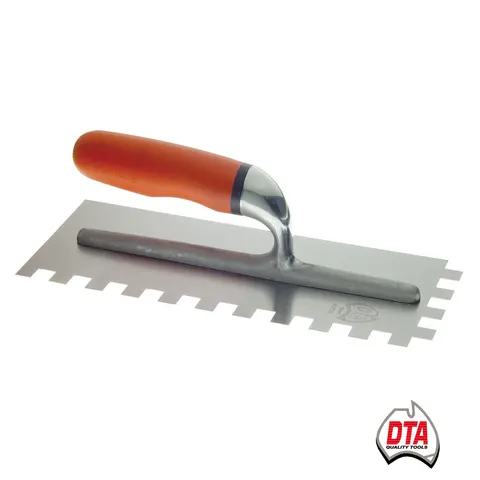
DTA Professional Bright Steel Adhesive Trowel Trade Series (Variety Sizes)
Contact us for Price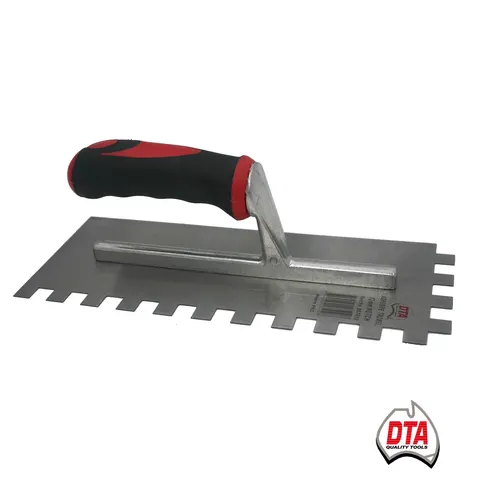
DTA Australia
DTA Renovator Series Adhesive Trowel with Rubber Handle 12mm
Contact us for Price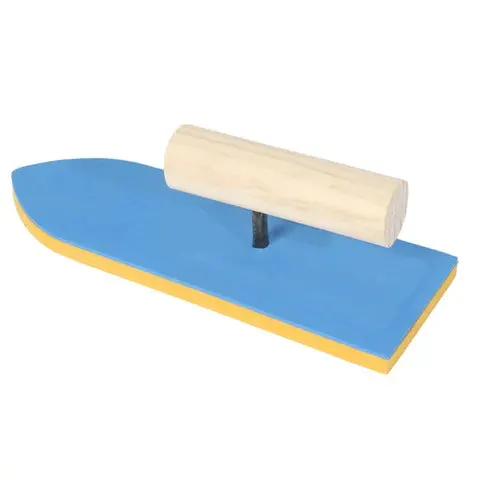
DTA Australia
DTA Rubber Pointed Trowel
Contact us for Price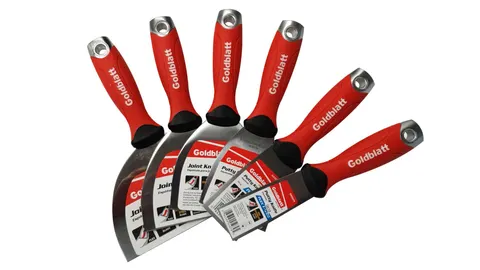
Goldblatt
Goldblatt Joint Knife Stainless Steel Soft Grip (Variety Sizes)
Contact us for Price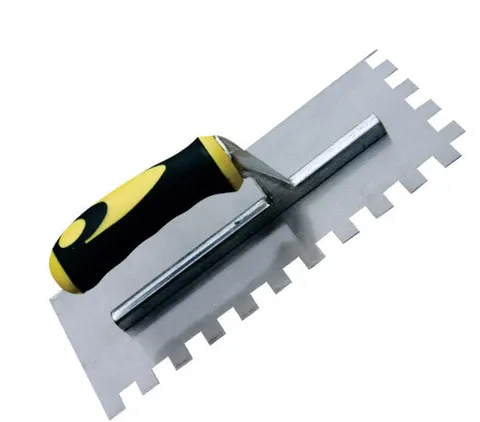
Roberts Designs
Roberts Designs Bright Steel Square Notched Adhesive Trowel 10mm RDXT209
Contact us for Price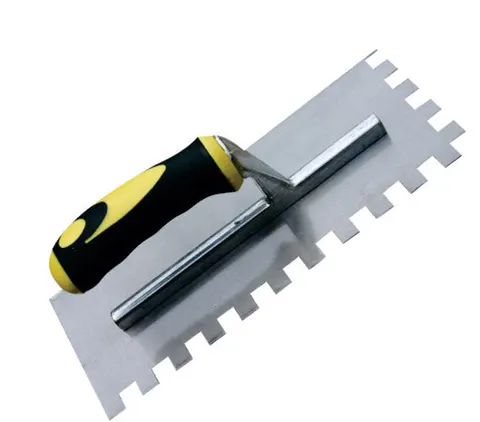
Roberts Designs
Roberts Designs Bright Steel Square Notched Adhesive Trowel 12mm RDXT210
Contact us for Price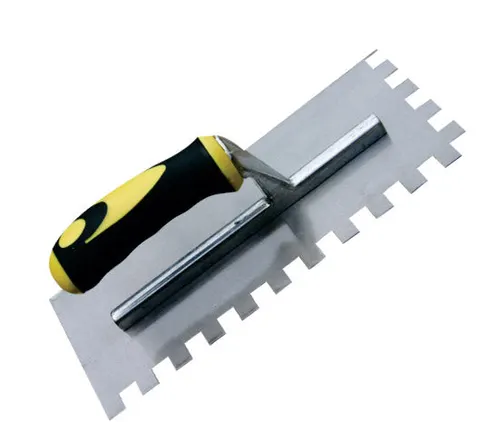
Roberts Designs
Roberts Designs Bright Steel Square Notched Adhesive Trowel 4mm RDXT206
Contact us for Price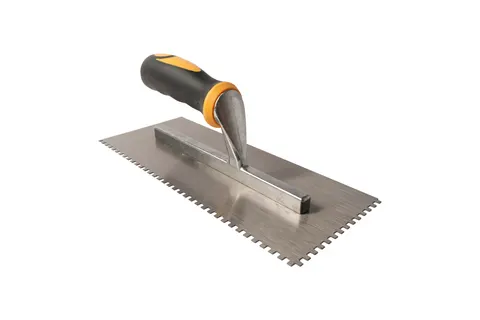
Roberts Designs
Roberts Designs Bright Steel Square Notched Adhesive Trowel 6mm RDXT207
Contact us for Price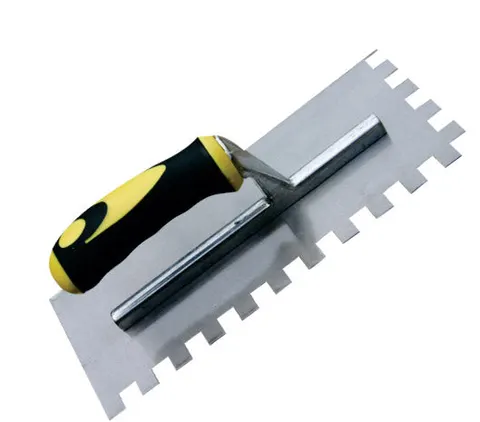
Roberts Designs
Roberts Designs Bright Steel Square Notched Adhesive Trowel 8mm RDXT208
Contact us for Price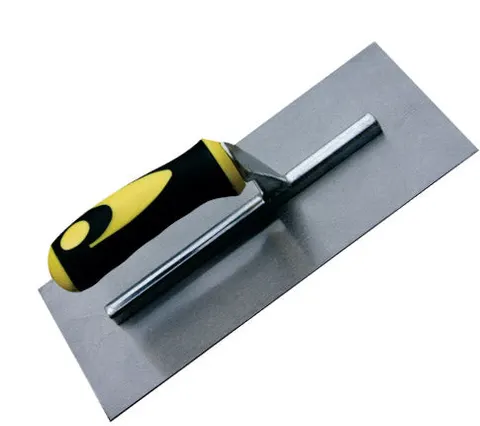
Roberts Designs
Stainless Steel Flat Maxi Grip Trowel RDXT211
Contact us for Price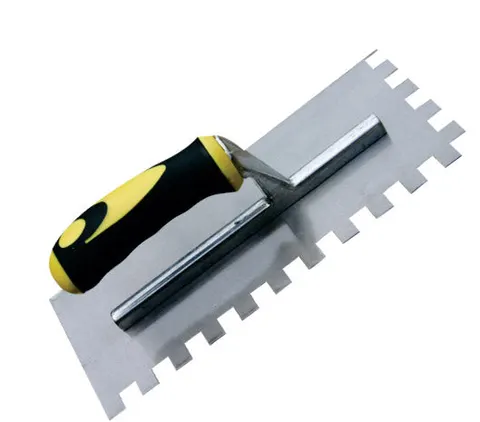
Roberts Designs
Stainless Steel Square Notched Maxi Grip Trowel 6mm RDXT213
Contact us for Price TLT
TLT Large Notched Trowel 10mm 400 x 100mm (BSL10)
Contact us for Price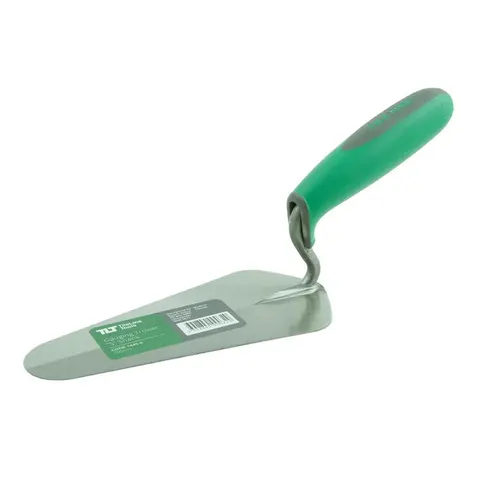
TileLine Tools
TileLine Tools Gauging Trowel 230mm
Contact us for Price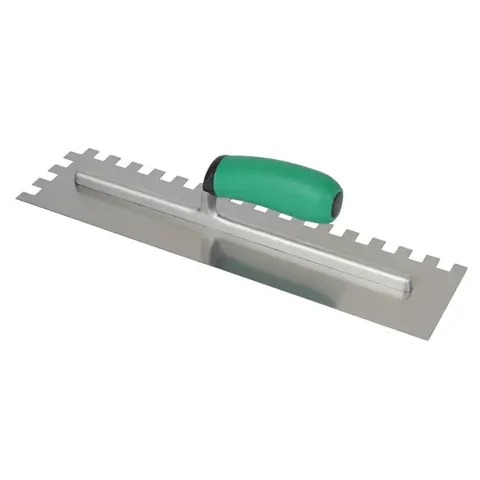
TileLine Tools
TileLine Tools Large Notched Trowel 10mm
Contact us for Price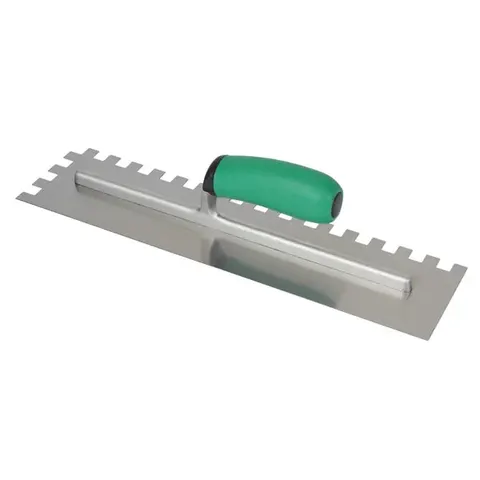
TileLine Tools
TileLine Tools Large Notched Trowel 8mm
Contact us for Price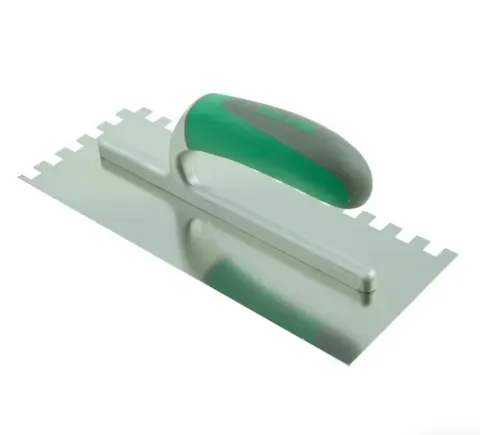
TileLine Tools
TileLine Tools Notched Trowel Soft Grip 10mm
Contact us for Price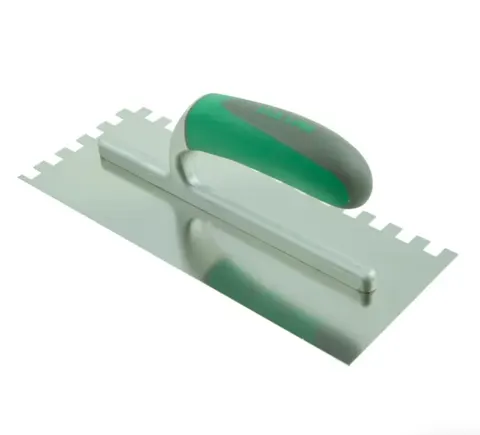
TileLine Tools
TileLine Tools Notched Trowel Soft Grip 12mm
Contact us for Price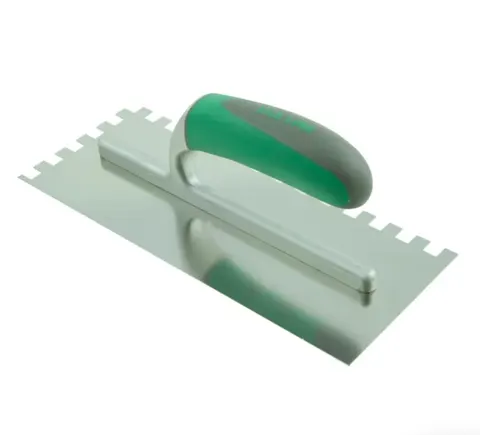
TileLine Tools
TileLine Tools Notched Trowel Soft Grip 15mm
Contact us for Price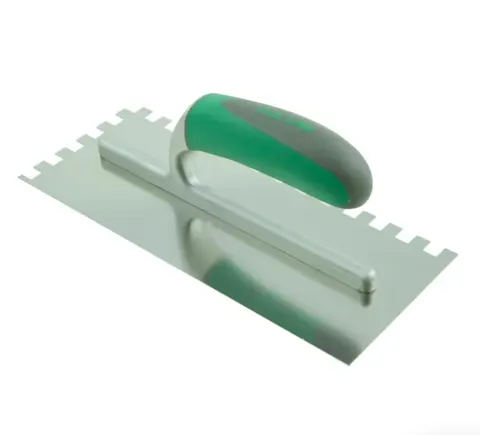
TileLine Tools
TileLine Tools Notched Trowel Soft Grip 4mm
Contact us for Price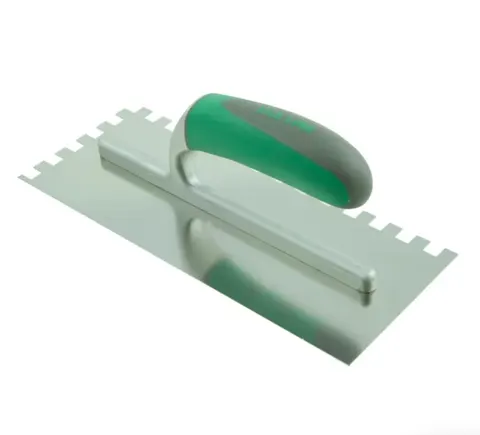
TileLine Tools
TileLine Tools Notched Trowel Soft Grip 6mm
Contact us for Price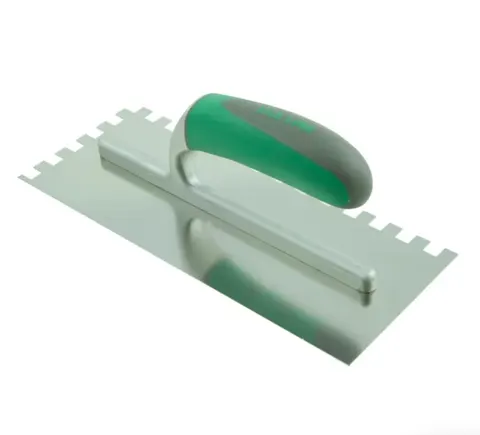
TileLine Tools
TileLine Tools Notched Trowel Soft Grip 8mm
Contact us for Price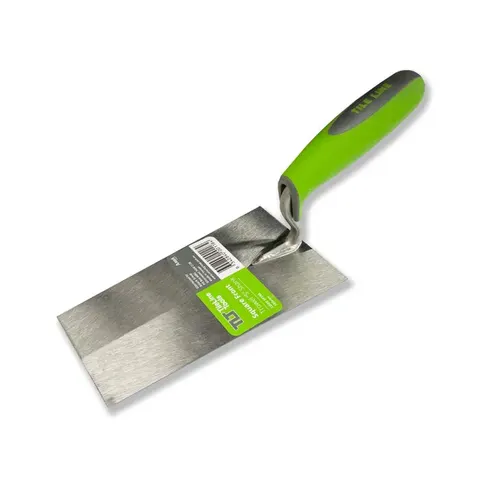
TileLine Tools
TileLine Tools Square Front Trowel 150mm
Contact us for Price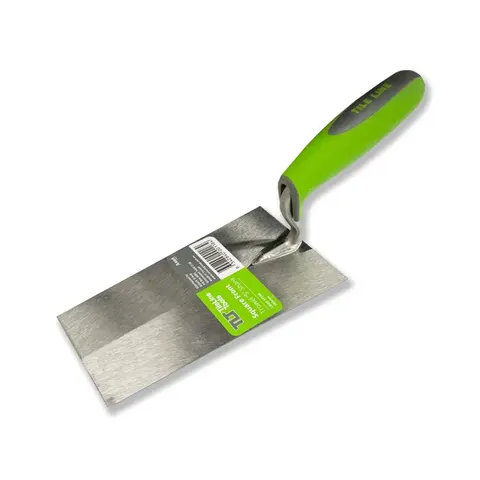
TileLine Tools
TileLine Tools Square Front Trowel 180mm
Contact us for PriceTrowels buying guide
Notch size and coverage
The notch determines the adhesive bed and therefore the coverage under the tile. Undersized notches leave voids; oversized ones waste adhesive and cause excessive squeeze-up into the joints. Notches wear down with use — a trowel that has done a few hundred square metres is no longer cutting the depth stamped on it. Check and replace them.
Stainless versus carbon steel
Stainless will not rust and stays clean in a wet bucket, which suits tiling and wet-area work. Carbon steel is stiffer and many renderers prefer the feel and the finish it produces, but it must be cleaned and dried after every use or it will stain the next wall it touches.
Notch profile
Square notches give the highest bed volume and suit floor tile and large format. V-notches lay down less adhesive and are used on small wall tile where a heavy bed would cause slip. U-notches produce rounded ribs that collapse more readily into a solid bed under the tile, which is why they are often preferred for large-format work where full coverage is critical.
Breaking in a finishing trowel
A new finishing trowel has sharp corners and edges that will dig lines into fresh render or plaster. Break it in by rounding the corners slightly with fine abrasive and working it on a rough surface before using it on a finished wall. Many renderers keep a dedicated older, well-worn trowel specifically for final passes.
Common questions
How do I know when to replace a notched trowel?
Measure the notch depth against a new one. Once it is noticeably reduced, coverage is compromised, and on large-format work that means drummy tiles.
What angle should I hold a notched trowel at?
Around 45 to 60 degrees, consistently, so the notch cuts to its full depth. A shallower angle leaves a thinner bed than the notch size suggests.
Stainless or carbon steel for rendering?
Personal preference mostly. Carbon steel is stiffer and produces a slightly different finish; stainless is lower maintenance.