The Waterproofing Shop

7 products
High-performance solvent-based polyurethane membranes for external decks, balconies, roofs and areas with significant structural movement. Higher elongation and better UV and weather resistance than water-based systems.
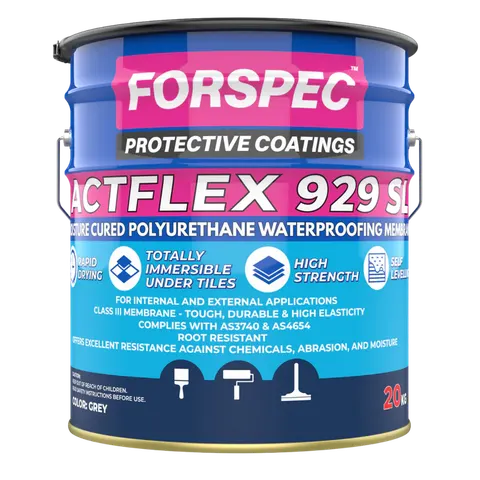
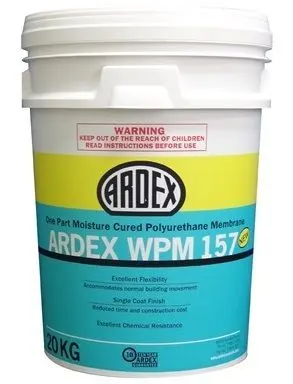
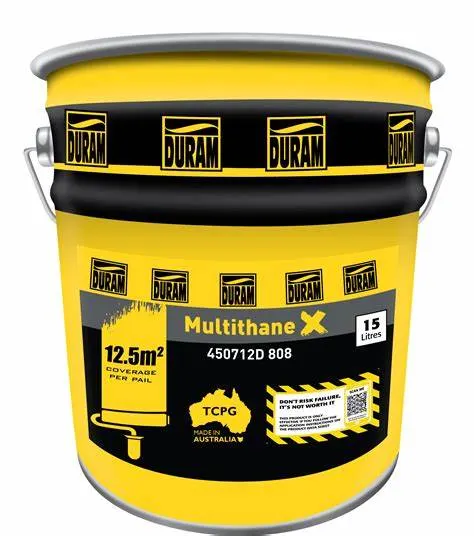
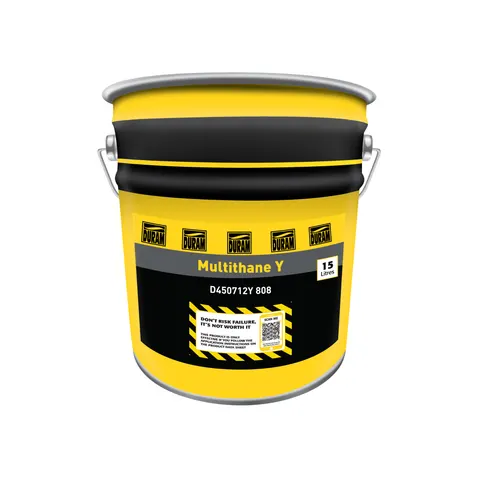
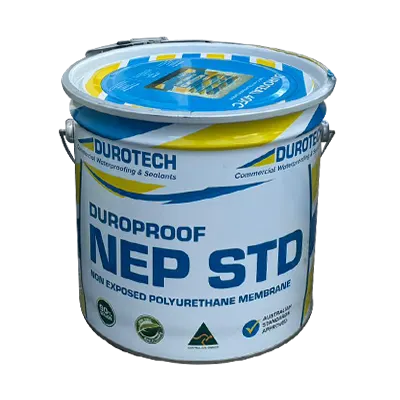
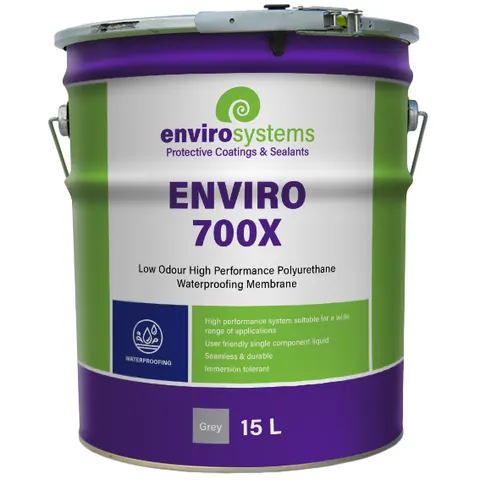
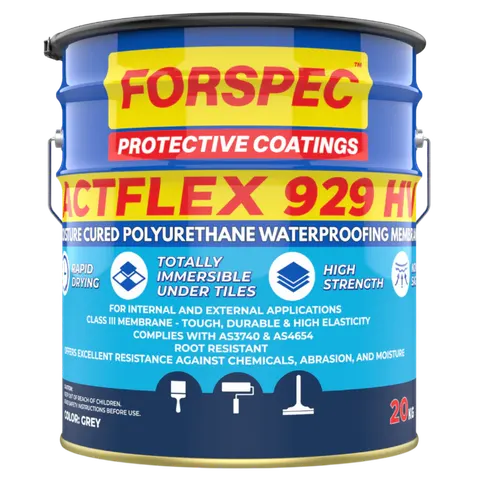
Choose solvent-based polyurethane where the substrate moves, the exposure is external, or the membrane stays exposed rather than being tiled over. Elongation figures well above water-based products let the membrane bridge hairline cracking and accommodate thermal movement on a west-facing balcony. They also cure through moisture rather than evaporation, so they perform better in cool and humid conditions.
These products carry real solvent loads. Use forced ventilation in enclosed spaces, appropriate respiratory protection, and keep ignition sources away during application and cure. Check the safety data sheet before starting — this is not a product to apply in a sealed internal bathroom with the door shut.
Solvent-based polyurethanes cure by reacting with atmospheric moisture, which behaves in the opposite way to water-based systems. Low humidity slows the cure considerably; very high humidity or a wet substrate accelerates it so fast that carbon dioxide is released faster than it can escape the film, causing foaming and pinholing. The workable window is wider than most people assume, but applying over a damp slab on a humid summer morning is a reliable way to produce a bubbled membrane that has to be ground off.
External decks fail at the same places internal wet areas do, but with more movement to accommodate. Every upstand needs the membrane carried up behind the door frame and flashing to the required height, every penetration needs bandage reinforcement, and the perimeter needs a bond breaker at the wall junction so thermal movement does not tear the film. Falls must reach the outlet with no ponding — a solvent membrane will survive standing water far better than a water-based one, but the tiles and grout above it will not.
Solvent-based systems have a maximum recoat time as well as a minimum. Once the previous coat has fully cured, the next coat bonds mechanically rather than chemically, and intercoat adhesion drops sharply. If the recoat window has been exceeded — commonly 24 to 48 hours — the surface must be abraded and, in some systems, re-primed before the next coat goes on.
Generally no, unless the manufacturer's compatibility table specifically allows it. The solvent can attack and lift the underlying film.
If the membrane stays exposed to foot traffic or direct UV, most systems require a UV-stable topcoat for the warranty to apply.
Almost always moisture — either a damp substrate, or application in very high humidity, releasing gas faster than the curing film could let it out. Affected areas need to be cut out and made good rather than coated over.
At minimum an organic vapour respirator, chemical-resistant gloves and eye protection, plus mechanical ventilation in any enclosed space. Check the safety data sheet for the specific product.