Flexovit

5 products
Sheet and roll abrasives, abrasive mesh for plaster and render, sanding blocks and pole sanders.
Abrasive mesh does not clog the way paper does when sanding plaster and joint compound, so it lasts considerably longer and keeps cutting. Paper is finer at the top of the grit range and is still preferred for final finishing where mesh would leave a coarser scratch pattern.
A pole sander spreads pressure across a wider area than a hand block, which is what produces a genuinely flat wall rather than a series of hollows around each joint. It also lets you work from floor level up a full wall height. Keep the head floating rather than forcing it, and finish with a light pass using a hand block to blend the edges.
Sanding by hand without a block produces waves, because fingers apply uneven pressure. A cork or rubber block gives a flat reference. For mouldings and profiles, flexible foam abrasive blocks conform to the shape without rounding over the detail, which is the usual damage done by folded paper on a profiled edge.
Sanding joint compound produces very fine respirable dust, and sanding old paint in pre-1970s buildings may release lead. Use P2 respiratory protection as a baseline, wet-sand where practical in occupied spaces, and seal the room off from the rest of the building. Fine plaster dust travels much further through a house than people expect.
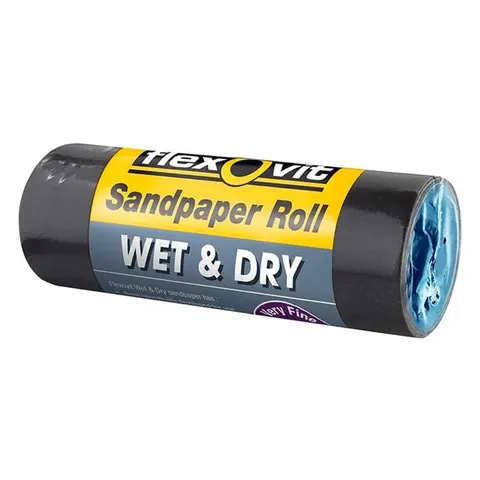
Wet sanding produces far less airborne dust and is preferable in occupied spaces, though it is slower and leaves a slightly different finish. Dry sanding needs P2 protection and extraction.
Typically 240 to 320 grit — enough to key the surface and knock back nibs without cutting through the coat.
Only wet-and-dry paper with a waterproof backing. Standard paper disintegrates.